
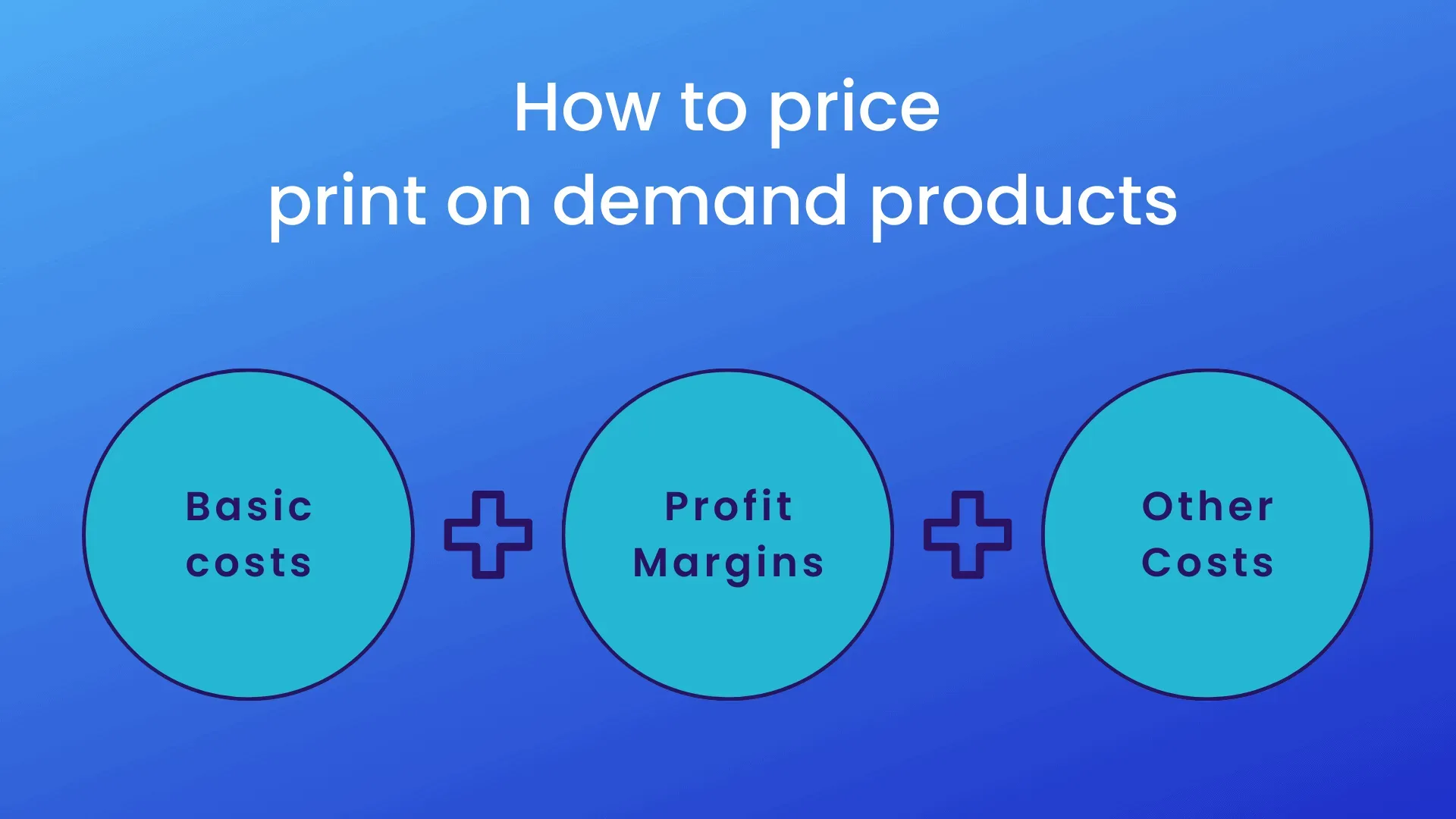
Pricing Print on Demand is a foundational driver of profitability and growth in a crowded market. To price effectively, you need a clear view of landed cost per unit, fulfillment fees, and the total selling costs that affect your bottom line. This is where POD pricing strategies, Print on Demand profit margins, and Cost-based pricing POD come into play as guiding concepts. The goal is to find a pricing sweet spot that covers all costs, delivers real value to customers, and leaves room for scale through smart Pricing models for POD. This guide introduces core concepts, practical models, and step-by-step methods to price print on demand products for profit and sustainable growth.
In practical terms, pricing POD products boils down to unit economics: balancing the base item cost, customization fees, and fulfillment with what customers are willing to pay. From an SEO perspective, the topic can be framed as a merchandising strategy for on-demand printing, focusing on perceived value, price anchoring, and timely offers. Many brands grow revenue by bundling items, creating tiered options, and adjusting regional pricing to reflect local willingness to pay, a core idea behind Scaling a print on demand business. By centering prices on value, durability, and convenience, you can protect margins while still attracting customers. This approach taps into related concepts such as pricing models for POD, cost-based and value-based methods, and data-driven experimentation.
Pricing Print on Demand: Core Cost Structures and Landed Costs
Pricing Print on Demand begins with a clear view of landed costs—the base product price plus printing or customization fees and fulfillment charges. Understanding this foundation helps you establish a price floor that protects margins and supports scalable growth. When you frame your pricing around landed cost, you’re applying a practical approach to POD pricing strategies that keeps profitability at the forefront while aligning with brand value.
The landed cost also includes shipping, packaging, marketplace or platform fees, payment processing, and potential returns costs. By incorporating these selling costs into your pricing model, you set prices that reflect true profitability rather than just product price. This holistic view is essential for maintaining Print on Demand profit margins and for developing pricing that resonates with customers while supporting sustainable growth.
Unpacking the true cost picture to drive POD profitability
A transparent landed-cost model reveals the minimum price necessary to break even for each SKU, which then informs your chosen pricing strategies. Recognizing all cost components—base product, printing, fulfillment, and destination-specific shipping—helps you avoid undervaluing your work and eroding margins.
Factoring in marketing spend, platform fees, returns, and currency considerations ensures your pricing decisions reflect the true profitability of each sale. This disciplined approach supports cost-based pricing POD and guides you toward pricing models for POD that balance competitive advantage with sustainable margins.
Pricing principles that power POD success: balance margins and value
Successful POD pricing blends multiple principles: cost-based pricing POD as a baseline, value-based pricing for differentiated designs, competitive pricing when appropriate, and tiered or bundle pricing to raise average order value. Each principle serves a different purpose and helps you reach a pricing sweet spot that covers costs while delivering perceived value to customers.
Dynamic and promotional pricing can ride waves of demand without destroying long-term value. By integrating these principles with the broader framework of POD pricing strategies, you create flexibility that supports scaling a print on demand business while preserving healthy Print on Demand profit margins.
Cost-based and value-based pricing in POD: choosing the right model
Cost-based pricing POD relies on landed costs plus a target margin, offering a simple, predictable method to price items. It provides a solid baseline that ensures every sale contributes to overhead and profit while minimizing price shocks for your business.
Value-based pricing, by contrast, prices products according to perceived value, design uniqueness, and branding. When you can clearly demonstrate quality, customization, or faster shipping, higher price points are achievable. This approach often requires strong messaging and proof—reviews, visuals, and guarantees—that reinforce the premium value and support healthy margins.
From bundles to dynamic pricing: optimizing pricing models for POD
Bundling core products and accessories or offering tiered packages can raise average order value while spreading fixed costs. This fits neatly with pricing models for POD, allowing you to balance affordability for entry buyers with higher-margin bundles for enthusiasts.
Geographic and currency-based pricing add a global dimension to your strategy, reflecting regional costs and willingness to pay. Promotions, limited editions, and scarcity tactics also complement pricing models for POD by driving demand and preserving margins during peak periods.
Actionable plan to scale: pricing, testing, and measurement for scaling a POD business
Develop an actionable pricing plan that ties landed costs to margin targets, forecasts, and ad spend. Use price tests and A/B experiments to identify points that maximize gross margin per SKU while maintaining healthy conversion rates, a core component of scaling a print on demand business.
Monitor key performance indicators such as AOV, gross margin, CLTV, and payback period on ads to ensure pricing decisions align with marketing goals andCAC targets. Regular reviews of costs, seasonality, and competitive moves will help you refine Pricing Print on Demand strategies and sustain growth over time.
Frequently Asked Questions
What is Pricing Print on Demand and how does landed cost influence it?
Pricing Print on Demand is the process of setting selling prices for POD products while ensuring you cover all landed costs and selling expenses. Landed cost includes base product, printing or customization fees, and fulfillment; selling costs include marketplace commissions, payment processing, shipping, packaging, and marketing. Start by calculating landed cost per unit, set a target margin, and choose a price that preserves profitability while remaining competitive. The goal is to balance value for customers with the ability to scale your POD business.
What are POD pricing strategies to improve profitability?
Key POD pricing strategies to consider include: cost-based pricing as a reliable baseline; value-based pricing when your design, quality, or branding offers unique value; bundles and tiered pricing to raise average order value; geographic pricing to reflect regional costs and willingness to pay; and promotions or dynamic pricing to manage demand. A blended approach helps protect margins while staying competitive.
How do you calculate Print on Demand profit margins and ensure your price covers all costs?
POD profit margins show how much profit you earn per sale after all costs. Compute gross margin as (price - landed_cost) / price, or per-unit profit as price - landed_cost minus selling costs. To price effectively, determine a target margin (commonly 40–60% for consumer goods, depending on niche), ensure the price covers landed costs plus platform, shipping, returns, and marketing, and test how changes in price affect demand and profitability.
How does Cost-based pricing POD work, and when is it the right approach?
Cost-based pricing POD prices your products by adding a margin to the landed cost. This gives a simple, predictable baseline and helps protect profitability on every sale. It’s a solid starting point, but be mindful it may ignore perceived value or demand shifts; augment with value-based pricing or bundles for higher-value offerings when appropriate.
How can pricing help you Scale a Print on Demand business?
Pricing can fuel scaling by increasing average order value and expanding market reach. Use bundles and tiered pricing to spread fixed costs, apply geographic pricing to reflect local costs and willingness to pay, and run price tests to optimize margins without sacrificing demand. As you scale, consider how shipping, fulfillment, and bulk terms reduce landed costs and improve profitability.
What Pricing models for POD should you test, and how do you run price tests?
POD pricing models you should test include cost-plus, value-based pricing, tiered and bundles, geographic pricing, and dynamic/promotional pricing. Steps: 1) establish a baseline with one model, 2) run controlled price tests (A/B or staggered launches) over 4–6 weeks, 3) track metrics such as gross margin, AOV, conversion rate, CAC, and CLTV, and 4) iterate based on results. Price testing helps refine Pricing models for POD and accelerates growth.
| Key Point | Summary |
|---|---|
| Landed Cost vs Selling Costs | Landed cost includes base product, printing fees, and fulfillment. Selling costs cover marketplaces, payment processing, shipping, packaging, and marketing. The selling price must cover all costs to reach profitability. |
| Pricing Sweet Spot | Pricing at the right level balances margins with demand; pricing too low erodes margins and budgets, while pricing too high may reduce demand and conversions. |
| Cost Structure Components | Core elements include base product, printing, fulfillment, shipping, platform/processing fees, returns, and marketing costs. |
| Pricing Principles | Apply cost-based, value-based, competitive, tiered/bundled, and dynamic/promotional pricing to guide strategy. |
| Pricing Models | Use cost-plus, value-based, tiered/bundles, geographic/currency adjustments, and promotions to shape price points. |
| Actionable Plan Steps | Calculate landed cost, set target margins, choose a pricing model, set prices and test, monitor metrics, and iterate. |
| Strategies in Action | Communicate clear value, use price anchoring, create bundles, offer limited editions, enable upsells, and apply free-shipping thresholds to influence AOV. |
| Operational Tips | Align pricing with marketing plans, test increments, monitor market signals, consider returns policies, and plan for scalability. |
| Common Pitfalls | Ignore landed costs, apply one-size-fits-all pricing, over-rely on discounts, assume price inelasticity, and neglect key performance metrics. |